
Product
The Mobility Brain
Our first product is a mobility brain powered by persistent spatial memory and 4D world models.
It helps robots understand where they are, remember what happened before, and choose safe, reliable ways to move through complex human environments.
This is more than navigation. It is a real-world mobility layer for robots that need to operate outside controlled spaces.
Core Questions
Three core questions
The Mobility Brain answers three fundamental questions every real-world robot must address.
Understand
What kind of space am I in? Where are the traversable areas, obstacles, entrances, stairs, slopes, curbs, corridors, people, and dynamic objects?
Remember
What has happened here before? Which routes worked, which failed, what changed, and what should be avoided?
Move
What is the safest and most reliable way to complete the task with this robot body?
Beyond Navigation
Mobility is more than navigation
Traditional robot navigation treats the world as a fixed obstacle course. The robot plans a path from A to B and hopes nothing changes.
The Mobility Brain takes a fundamentally different approach. It treats the world as a dynamic, evolving environment that the robot can learn from and adapt to.
This is the difference between a robot that can follow a line and a robot that can enter the real world.
Architecture
Cloud reasoning. Persistent memory. Edge action.
Beaver Robotics is building a three-layer architecture for real-world robot mobility.
Cloud Reasoning
Language task understanding, long-horizon planning, world model updates, simulation asset generation, and cross-scene reasoning.
Persistent Spatial Memory
4D scene memory, temporal history, affordance memory, action outcomes, semantic landmarks, and environment versioning.
Edge Mobility Runtime
Low-latency inference, safety runtime, local perception, closed-loop feedback, deployment logs, and multi-body execution.
The world model learns in the cloud. The robot acts safely at the edge.
Real Environments
Designed for real environments
Each real-world task creates spatial and action data: routes, failures, obstacles, timing, human interactions, environmental changes, and task outcomes.
This data flows back into the 4D world model, making it richer, more accurate, and more useful for future deployments.
The Mobility Brain gets better with every robot that uses it — creating a compounding intelligence advantage that grows over time.
Multi-Form
For different robot bodies
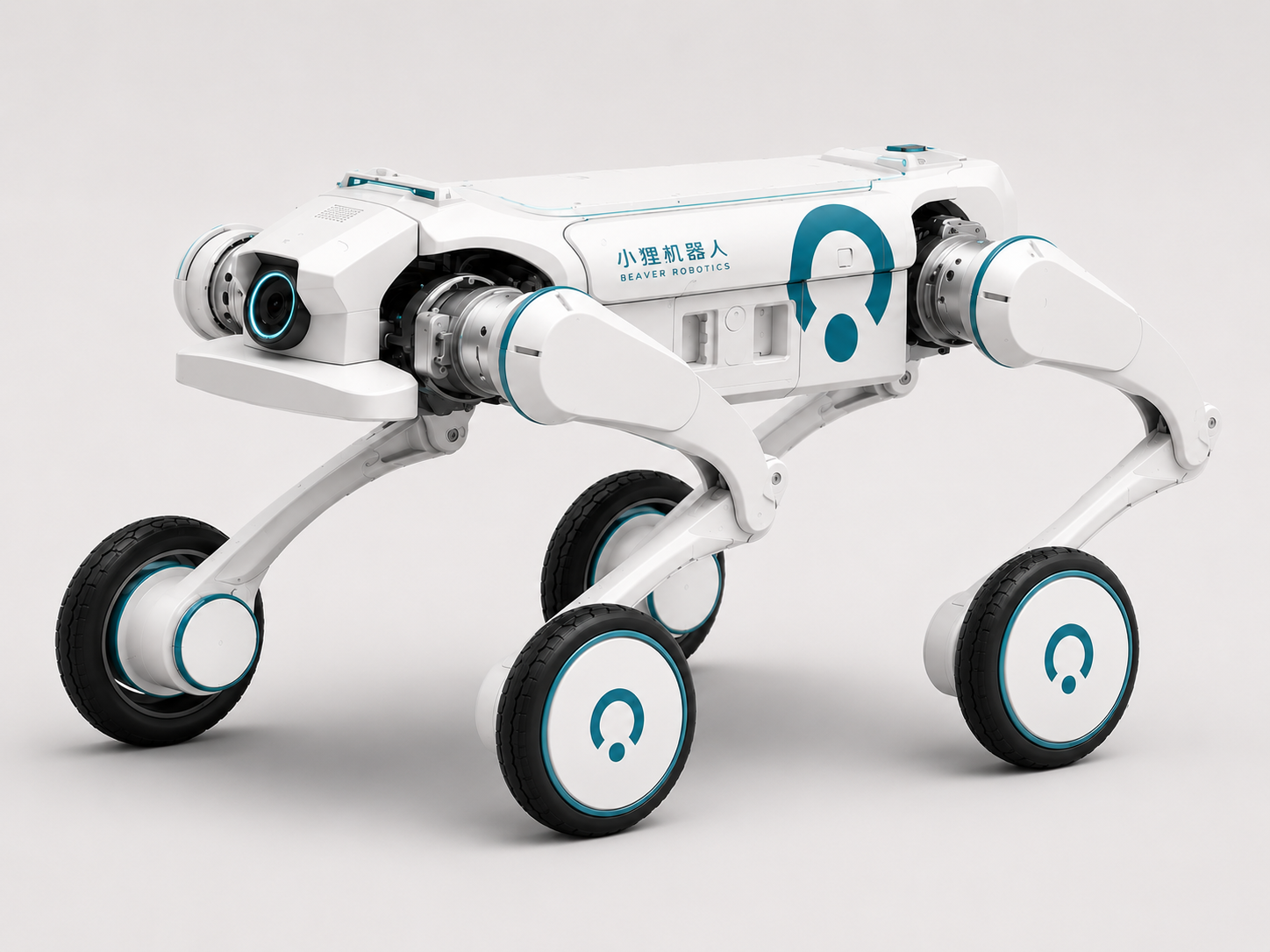
Different robot forms have different physical capabilities. The Mobility Brain adapts its strategies to each form — wheeled, wheeled-legged, two-wheel, mobile manipulators, and future embodiments.
One world model. Many robot bodies. The memory stays.
Build the spatial intelligence layer for real-world robots with us.
We are looking for deployment partners, hardware partners, research collaborators, and investors who believe robots need spatial intelligence to enter the real world.